World
Civilizations III, the Expansion of Europe
Guns &
Gunpowder Empires
• Gunpowder weapons: became
effective in sieges by the mid-15th century, & that changed the balance of
power, against those in fortified strongholds & in favor of those with the
new weapons. Governments that could
monopolize these weapons were able to create or strengthen & expand their
empires. This happened from Russia to
China & from the Ottoman Empire to India, but not in Western Europe where
no single ruler was able to monopolize siege cannons. Instead, rivalries led to improvements in the art of war that
raised European armies above others & contributed to European power around
the globe in the 18th & 19th centuries.
• Primitive gunpowder weapons
reached Europe in the 13th century via Mongol attacks, whereafter the
Europeans, having access to more metal & through advanced mining
techniques, built bigger & better guns.
In around 1500 they put cannons on their ships, which added to their
naval & commercial superiority.
Thus, Europeans developed better equipped & more powerful armies
than those elsewhere, but divisions within Europe perpetuated a balance of
power in Eurasia & enabled other empires to survive intact for some time.
• Russia used siege
cannons in conquering land in Siberia & to the Pacific as well as in
consolidating Muscovy into a large, autocratic state. Grand Duke Ivan III (1462-1505) used these weapons--along with
Russia’s excellent river system--to extend his reach, as did Ivan the Terrible
(1533-84). Under Peter the Great
(1689-1725) Russia started to modernize & catch up with the West.
• The sultans of the Ottoman
Empire used cannons to capture Constantinople (in 1453), & his corps of
footsoldiers, the Janissaries, were equipped with handguns. In their conquests, the Ottomans were mostly
limited only by the distance their armies & big guns had to travel from
Constantinople--the distance to the Hapsburg capital of Vienna & the distance
to the Safavid empire in Persia & Azerbaijan. In the 17th century, the Janissaries became unreliable, & the
Ottomans failed to keep up with European technical advances in the art of war.
• The Mughal Empire of
India began in 1526 when Babar crossed the Himalayas to begin the conquest of
the Indian subcontinent. But because
the Mughals didn’t control the seas, the Europeans established fortified bases
along the coast. Eventually, the
English & French replaced the Portuguese as the chief European traders;
they also recruited Indian soldiers (sepoys) for protection. By the 18th century, with their skilled
sepoys & with their navy, the British (represented by their East India
Company) succeeded the Mughals as rulers of India. The Mughals also lost out because their military power depended
on horses & cavalry, which made them vulnerable, although their use of
siege guns had helped to keep them in power for almost 2 centuries.
• The Safavid dynasty in
Persia (modern Iran) & Azerbaijan was founded by Shah Ismail
(1502-24). The Ottomans kept the neighboring
Safavids at bay through most of the 16th century, but then Shah Abbas I the
Great (1587-1629) imported guns from Europe to make the Persian empire
formidable. His successors, however,
were less able, & Safavid rule broke up by the end of the 17th
century. Still, because they
established a new branch of Islam--Shiite--the Safavids have continued to
affect the course of history.
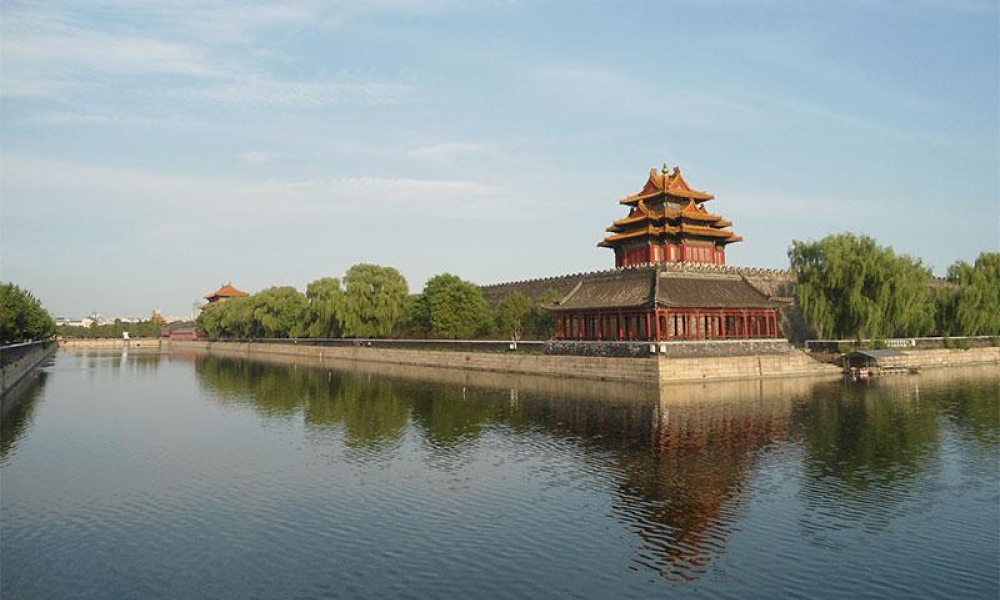
• Although gunpowder &
guns were invented in China, officials of the Sung dynasty (960-1279)
had little use for their inventions because they protected themselves inside
fortresses & walled cities. The
next dynasty, the Mongols (1279-1378), used guns & gunpowder, but shortages
of metal kept their weapons small & less powerful. The Ming dynasty (1368-1644) reacted similarly
to the Sung. And the still-influential
thinking of Confucius viewed fighting as a failure of good government. So mandarin (public) officials did
not try to provide big guns or sophisticated troop formations (as the Europeans
were doing). Even the sometimes-brilliant
Qing (or Manchu) dynasty (1644-1912)--especially under the rule of Kangxi--was
slow to change; not until the 19th century was the obsolescence of their
military system made clear to them, but then it was too late.
• Japan came to use guns
& gunpowder in the 1540s, after contact with the Portuguese, which their
military tradition & sword-making ability took advantage of. By late 16th century the Japanese military
had 2 branches: gun-carrying infantry & sword-wielding samurai. But the new Tokugawa shogunate (rule
of great military commanders; 1603-1868) disliked guns, so the new weapons
eventually disappeared from Japan, & the country became isolated until the
19th century.
• Thus, the new gunpowder weapons had some impact in most parts of the inhabited world, but each place reacted differently. In China & Japan, for example, guns were allowed minimal influence; those countries kept themselves isolated, but then paid a high price, in the 19th century, by being vulnerable to the West. But while the West’s exploitation of gunpowder weapons enabled them to become rich & to dominate much of the globe, the effort cost countless lives & helped to keep Europe embroiled in war for much of modern history.